
Stress: what happens to the body when the pressure never lets up?
Last updated: August 1, 2026 · 4 min read
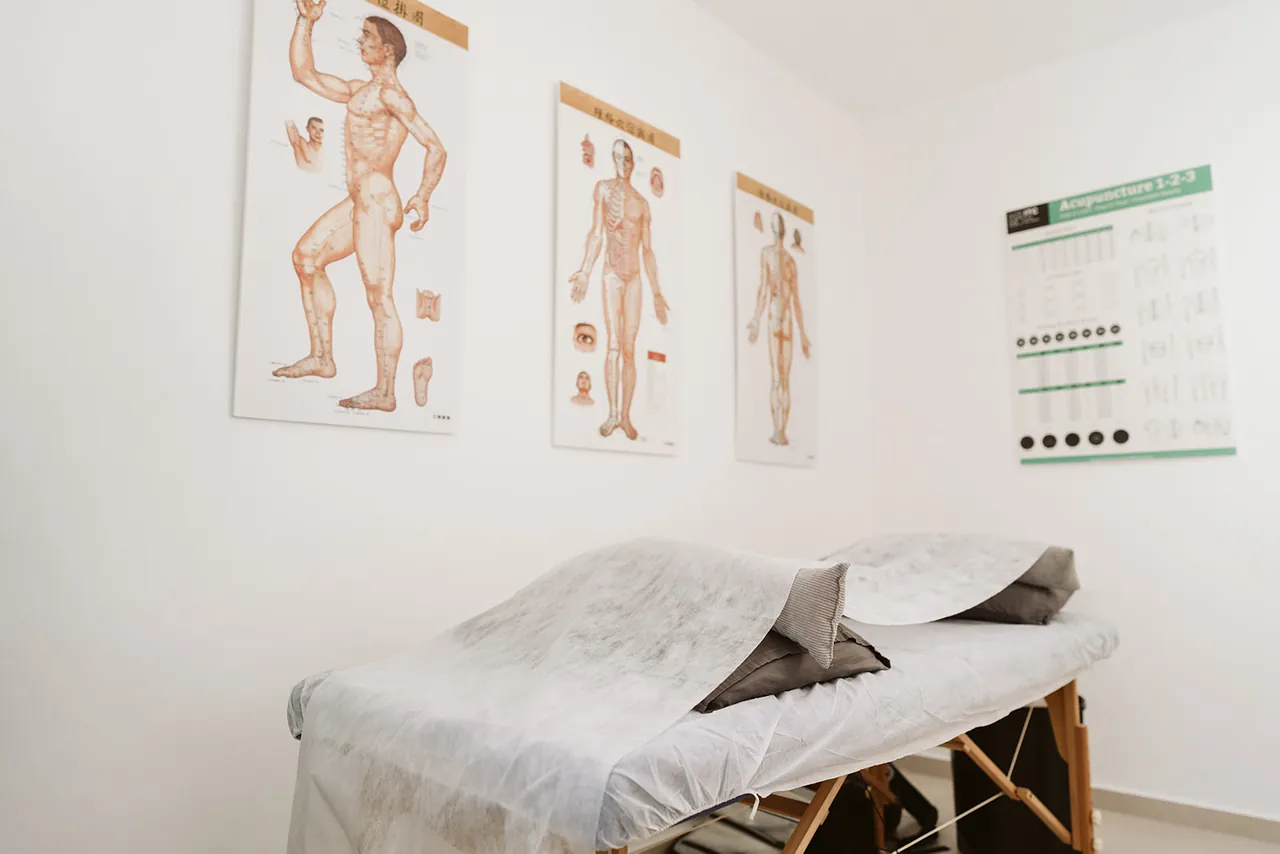
You've closed the laptop, but you're still thinking about work. A message you haven't answered, something waiting for tomorrow, one more thing you just remembered. Your jaw is tight and your shoulders are raised. At night you're tired, but you struggle to fall asleep.
Many people call it 'just stress'. Sometimes a busy period passes; sometimes the tension stays for weeks and affects sleep, patience, and digestion. At the clinic I ask where you feel it and when it bothers you most during the day.
What does the body do under stress?
It is easy to call stress the disease of modern life, but stress is not a disease in itself. It is a physical and emotional response to a challenge. When the brain detects a demand or threat, heart rate and breathing can rise, muscles tighten, and the body gets ready to deal with what is in front of it. For a short time, this is useful.
Sometimes the working day ends and your body stays on alert. Light sleep, headaches, a stiff neck, an unsettled stomach, or a short temper can accompany prolonged stress. Notice when they appear and whether they change during quieter periods. New or persistent symptoms also need medical assessment.
Why is a day off not always enough?
Because pressure is not only the number of tasks in your calendar. It may also be the habit of always being available, checking your phone again, or feeling guilty when you rest. A day off can help. But if you return to the same pace and the same tension, the body may not get a real chance to recover.
How does Chinese medicine look at stress?
Chinese medicine sometimes uses the term 'Liver Qi stagnation' for a pattern in which tension, a sense of tightness, changes in digestion, or pain that worsens during busy periods appear together. It is the name of a traditional pattern, not a diagnosis of liver disease on a blood test.
One person loses sleep under pressure, another gets headaches, and someone else feels it after eating. I ask when it began, what makes it worse, and what helps. Those answers guide my choice of acupuncture points and the rest of the treatment.
How can Chinese medicine help?
Treatment may include gentle acupuncture, shiatsu, or Onnetsu heat treatment, depending on your condition and what feels comfortable. I look for relief where the tension is felt: in the shoulders, in sleep, or in feeling constantly on alert. Between appointments we also try adjusting a habit that adds to the strain, such as working on your phone until you get into bed.
Some studies of acupuncture for anxiety symptoms are encouraging, although the quality of the evidence remains limited. During treatment I ask about sleep, whether the body feels less tense, and how the day is going. Psychological or medical care can be included when needed, along with changes to demands at home and work.
A case from the clinic
A woman in her early sixties came to the clinic after a difficult experience abroad. She felt she could not breathe freely, as though her chest and upper body were closed off. The experience stayed with her after she returned home, and she was unwilling to fly again. Even the thought of sitting on a plane was difficult for her.
We combined acupuncture with hands-on treatment. Over time she began to feel calmer. Later, flying came up again, and she could imagine herself sitting on a plane. Eventually she did fly and told me she felt better. At the start of treatment, she hadn't been willing to consider it.
What can you do day to day?
Try a ten-minute walk after work, a meal without your phone beside the plate, or a few slow breaths before you go inside. Choose one thing that fits your day. If it helps, try it again tomorrow.
If sleep has suffered, a regular waking time and less light and screen use in the evening may help. If your shoulders stay raised all day, get up and move a little between tasks. It is also worth looking at what can come off your to-do list and where you can ask for help at home or work.
When is it helpful to bring in additional support?
If stress continues for weeks, affects work or home life, comes with panic attacks or depression, or changes sleep and appetite significantly, speak with your family doctor or a mental health professional. Chest pain, shortness of breath, or an unusual physical symptom needs medical assessment; it should not simply be written off as stress.
Frequently Asked Questions
- What is the difference between stress and anxiety?
- Stress is a response to a demand or threat and may ease when the situation passes. Anxiety can continue without an immediate clear trigger and interfere with daily life. If the feeling is strong or persistent, get assessed rather than trying to name it yourself.
- Can acupuncture be combined with psychological therapy?
- Yes. Acupuncture can be used as complementary care alongside psychological therapy, tailored to the person and reviewed as treatment progresses. When stress or anxiety affects daily function, professional assessment is important too. Acupuncture does not replace mental health or medical treatment that is needed.
- How long does it take to feel a change?
- There is no fixed number. Early on I look for practical signs: calmer sleep, less tension in the body, or a better ability to pause between tasks. If there is no useful change, we reconsider the plan.
Further reading
Related treatments
Acupuncture
Traditional Chinese acupuncture that balances the flow of Qi in the body and helps with pain, stress and sleep difficulties
Shiatsu
Traditional Japanese treatment using pressure along the channels of Chinese medicine, for deep relaxation and balance
Onnetsu - Device & Mat
Japanese treatment combining a special mat and heating device, helping with deep relaxation and tension release
More articles
A natural approach to insomnia: what Chinese medicine can really offer
Why sleep breaks down and what really helps: the Chinese medicine view of insomnia and the small habits that bring back quiet nights.
June 15, 2026 · 5 min read
What is pain? The Western view, the Chinese medicine view, and what to do when it stays
Why pain does not always reflect tissue damage, how Chinese medicine describes it, and how to choose care without missing signs that need a doctor.
July 18, 2026 · 5 min read