Cupping in Netanya
Ron Ben Bachar · Chinese medicine & acupuncture practitioner · Reidman College graduate · 8+ years of experience
An ancient treatment that helps release tight muscles, relieve pain and ease built-up tension
- Stimulates blood flow to the painful area
- Helps ease local pain
- Helps ease feelings of heaviness and strain
- Non-invasive and relaxing treatment
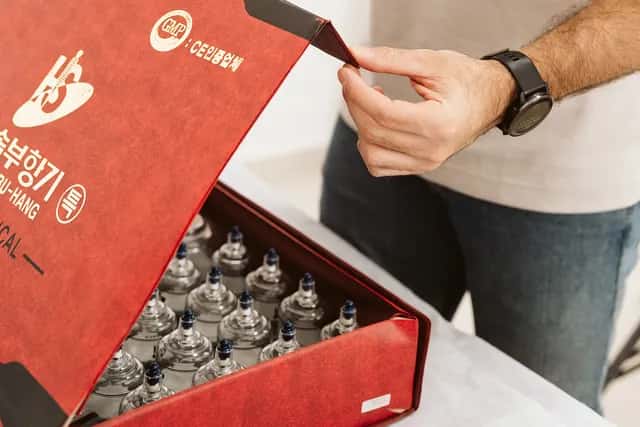
Cupping is the tool I reach for when a deep muscle refuses to let go. A gentle vacuum draws up the skin and the tissue beneath it, increases local blood flow and releases muscle layers that are hard to reach with pressure.
It's an ancient technique, but anyone who has seen Olympic swimmers with purple circles on their shoulders knows it's alive and kicking today. In my clinic it's usually combined with acupuncture, and sometimes stands on its own.
What does the vacuum actually do?
The cup creates negative pressure that lifts the skin and the fascia, the connective tissue that wraps the muscles. That lift increases blood flow in the area, and according to some studies it also affects the local pain receptors. Most patients describe the result in one word: release.
And the purple circles? They aren't painful bruises but blood drawn toward the surface, and they usually fade within a few days.
Stationary cups or moving cups?
Some cups sit on a single spot for a few minutes, and there's a technique where I glide the cup along the muscle with a little oil. A kind of deep massage in reverse: instead of pushing in, pulling out. With lower back pain I move between the two approaches depending on what the muscle dictates that day.
Why combine cupping with acupuncture?
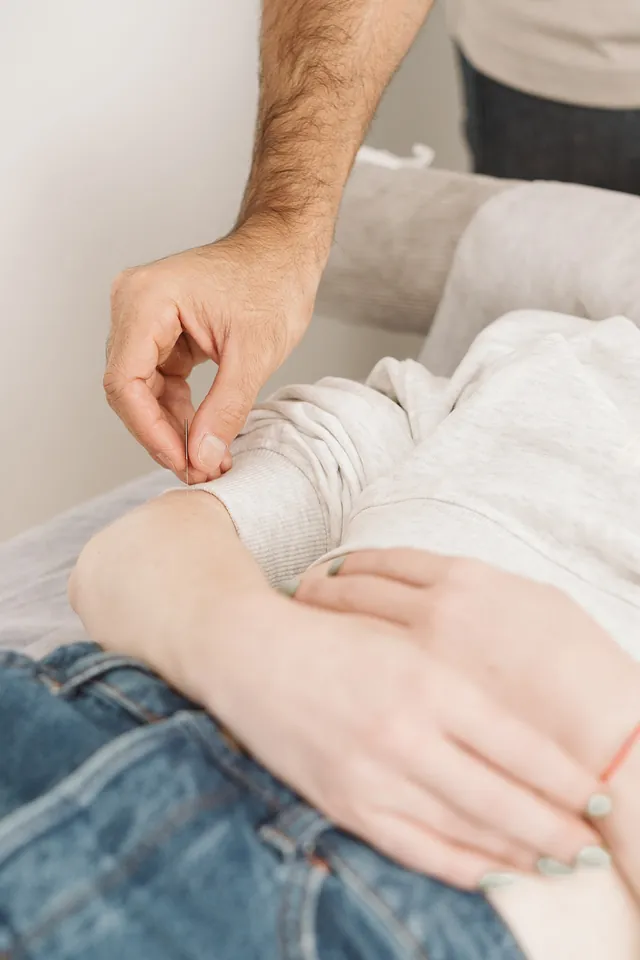
Acupuncture talks to the nervous system. Cupping talks to the tissue itself. When the two work together you can both calm the pain signal and treat the muscle that produces it. With my background in sports therapy, this combination has become one of my main tools for athletes' overload injuries.
What to keep in mind after the treatment?
Drink water, keep the area warm, and don't be alarmed by the circles: they're part of the deal and disappear within a few days. It's best to avoid heavy exertion that evening and let the tissue finish the work we started.
Cupping isn't suitable for every skin or medical condition, so the intake before treatment covers that too. When in doubt, I adjust the intensity or pick a different tool from the box.
A case from the clinic
A 38-year-old recreational runner came in with his lower back seizing up again and again after long runs. We worked with gliding cups along the back extensors, combined with a short Tan-method acupuncture session. He returned to his distances gradually, and today he comes in mainly before heavy training blocks. Maintenance, he calls it. I agree.
Who is the treatment for?
- Lower back and neck pain
- Shoulder pain and muscle tension after sports
- Knee stiffness and muscle tension around the joint
- Migraines and tension headaches
- Muscle pain and fibromyalgia
- Carpal tunnel syndrome and nerve pain
- Mental strain and chronic stress accompanied by body heaviness
From patient reviews
I came with severe pain and uncertainty, and Ron managed to diagnose incredibly accurately. Beyond professionalism, he has exceptional communication skills, calming human treatment, and unmatched patience.