
What is pain? The Western view, the Chinese medicine view, and what to do when it stays
Last updated: July 18, 2026 · 5 min read
Sometimes you know exactly when the pain started: you stumbled, twisted your ankle, and it has hurt to walk ever since. Sometimes there is no clear starting point. Your back aches when you sit, your neck gets stiff toward evening, and after a few weeks you get used to rising carefully from a chair.
If the scan was normal, why does it still hurt? I hear this often at the clinic. People bring an X-ray or MRI report and try to make sense of the result alongside what they feel. Looking at how Western and Chinese medicine understand pain can help explain that gap.
What is pain in Western medicine?
The International Association for the Study of Pain defines pain as an unpleasant sensory and emotional experience linked to actual or potential tissue damage, or resembling one. A scan can provide useful information, but it cannot measure how much you hurt.
When your hand touches a hot surface, the nervous system warns and protects you. With persistent pain, that warning system can stay sensitive after the original event has passed. Poor sleep, strain, and fear of movement may affect how much it hurts.
Pain is real even when an MRI does not fully explain it. New or changing pain still deserves attention and sometimes medical investigation. One normal test does not mean there is nothing left to check.
How does Chinese medicine understand pain?
Chinese medicine looks for a pattern: is the pain sharp or dull, fixed or moving, worse with cold, brought on by effort or present at rest? Sleep, digestion, and emotional strain are part of the conversation too.
Chinese medicine describes some pain patterns in terms of Qi and blood not moving freely, and others in terms of weakness or deficiency. These traditional terms help me choose a treatment. They describe a Chinese medicine pattern; they are not medical diagnoses of inflammation or nerve injury.
Two people may come in with shoulder pain and receive different treatments. For one it began after repeated strain at work; for the other it comes with morning stiffness and broken sleep. I want to hear those details before deciding how to treat them.
Where do the two approaches meet in treatment?
I start with what we can check: when the pain began, what makes it better or worse, whether movement is limited, and whether there is radiating pain, weakness, or altered sensation. If a medical workup is needed, that comes first. When conservative care makes sense, I also follow function: is it easier to get up, walk, sleep, or return to an activity?
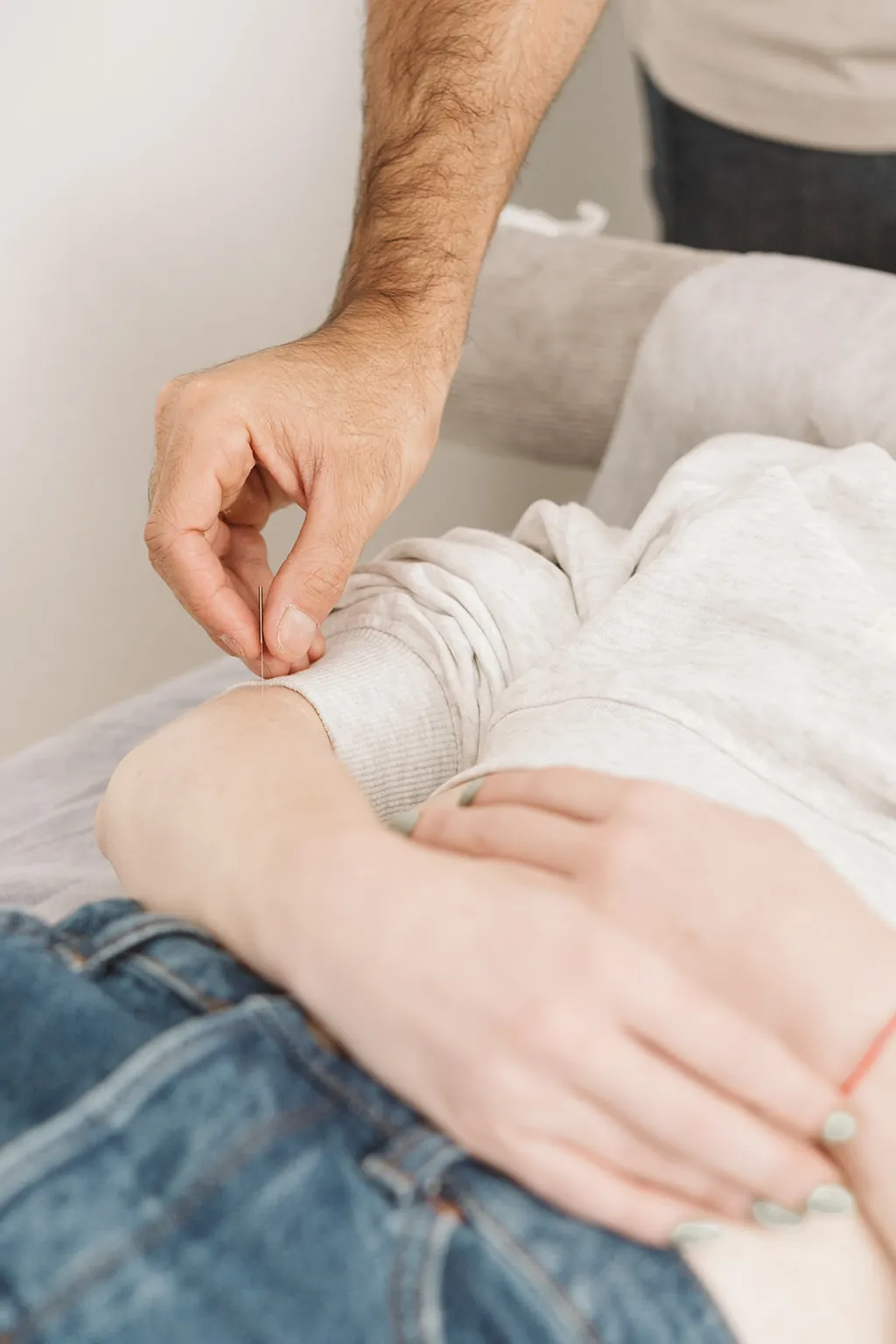
Acupuncture can be one tool. Sometimes I use points away from the painful area and check movement during treatment; sometimes I add cupping or guidance about movement. Research suggests acupuncture may help with some pain conditions, particularly back and neck pain, but results vary across conditions and people. There is no one treatment for every kind of pain.
At the next appointment I ask how long the relief lasted and how the week went: was it easier to get up in the morning, sit at work, or sleep? If pain or function has not changed after a few sessions, I review what needs adjusting and whether another treatment should be involved.
A case from the clinic
A 43-year-old man who spends most of his day at a computer came in with recurring back pain lasting several months. He had already seen a doctor but was still afraid to move. First he gave up evening walks, then sitting on the floor with his child. Even on good days, he was careful with every movement, worried the pain would return.
We combined acupuncture with a gradual return to movement, guided by his condition and the medical advice he had received. Over the course of treatment, he described less pain and began to trust his body more. Later he returned to short walks with his partner. At appointments I also asked about the day after treatment, to understand what was improving and what still needed adjusting.
What can you do when you are hurting?
If you have been assessed and have not been told otherwise, keep some movement that fits your situation: a short walk, a change of position, or a gradual return to an action you have been avoiding. You do not have to fight through the pain, and you do not have to stay still until it disappears. Look for an amount you can repeat tomorrow.
For a few days, note when the pain appears, what you were doing beforehand, how you slept, and what helped. A few words on your phone are enough. Bringing those details to an appointment makes it easier to understand an ordinary day and what needs checking.
When does pain need medical attention?
New and unusually severe pain, pain after a significant injury, worsening weakness, loss of sensation, fever, unexplained weight loss, or a change in bladder or bowel control calls for medical assessment. Chest pain or a sudden, exceptionally severe headache should be treated urgently, not held over for an acupuncture appointment.
Even without an urgent sign, pain that persists, worsens, or disrupts daily life deserves a proper assessment. Different approaches can work together, but first we need to understand what we are dealing with.
Frequently Asked Questions
- How can I hurt if my MRI is normal?
- Imaging shows structures, not everything the pain system is doing. Nervous system sensitivity, strain, and movement can affect pain without one finding explaining it all. The pain is real. If it persists or changes, see your doctor to revisit the picture.
- Is every pain 'stagnation' in Chinese medicine?
- No. Chinese medicine describes different patterns, including strain, cold, and deficiency. The assessment depends on the character of the pain and the rest of the picture, not one label for everyone.
- Should acupuncture make pain disappear immediately?
- Not necessarily. Sometimes movement or pain changes in the first session, and sometimes it does not. I also look at whether relief lasts and whether function improves over time. Without a useful response, we change course.
Further reading
Related treatments
More articles
Acupuncture for lower back pain: what can you expect from treatment?
How acupuncture helps with lower back pain, what the research actually shows, what treatment looks like at a Netanya clinic, and what to do at home today.
May 4, 2026 · 8 min read

Neck pain radiating to the arm: when is it muscle, when is it a nerve, and how can acupuncture help
Neck pain radiating to the arm doesn't always mean a pinched nerve. Muscle vs nerve pain, when to see a doctor, and how acupuncture can help at a Netanya clinic.
July 4, 2026 · 9 min read