
Acupuncture for knee pain: keep moving, even with osteoarthritis
Last updated: October 19, 2026 · 5 min read
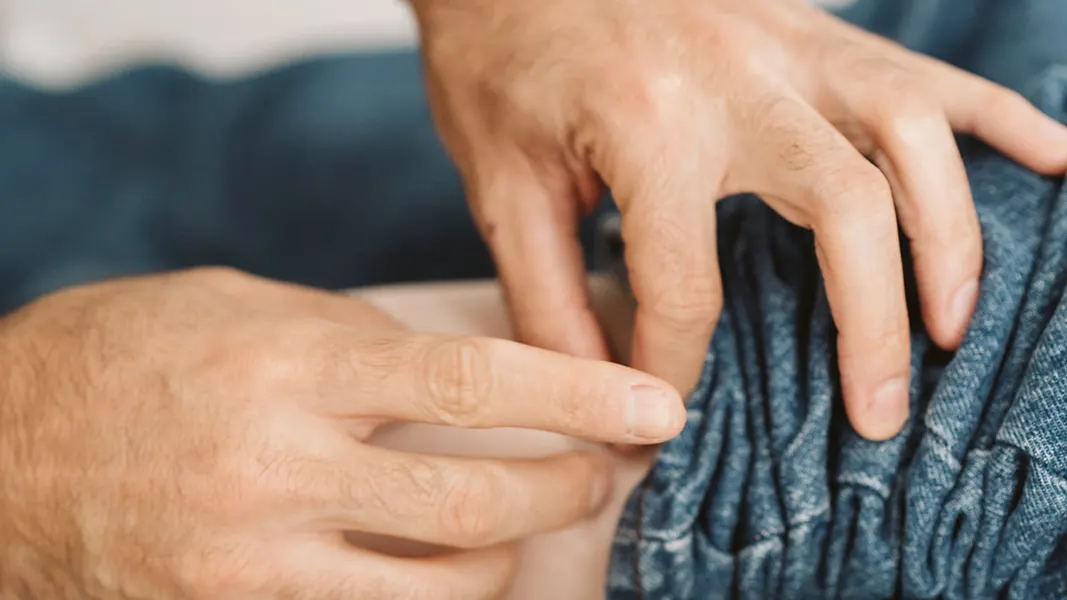
The knee hurts going down stairs, getting up from a chair or toward the end of a workday. Sometimes you can carry on as usual, and sometimes you start to cut back: a shorter walk, fewer outings, another evening at home because the leg is already bothering you.
When people come to me with knee pain, I also want to know what they have given up because of it. Some want to get back to an evening walk, and some simply want to stand at work without thinking about the knee all the time. These are also the activities we'll want to follow throughout treatment.
What does a diagnosis of osteoarthritis mean?
Osteoarthritis, often called cartilage wear, involves changes in the cartilage and in other tissues of the joint. It can show up as pain during activity, stiffness after sitting, and sometimes swelling.
The word 'wear' sometimes sounds like an instruction to stop using the knee. In practice, adapted movement and strengthening are a central part of treatment. Even when there are changes in the joint, you can work on strength, on walking and on doing everyday activities more comfortably.
The X-ray, too, gives only part of the picture. The degree of change it shows doesn't always match the intensity of the pain. So I take into account what the medical workup found, and alongside it what you feel and what the knee lets you do. Pain that began after an injury or a sharp twist may have a different cause and needs to be handled accordingly.
Finding a dose of movement that suits you
It's easy to understand the wish to rest when the knee hurts. Even so, prolonged avoidance of activity can weaken the muscles and make it harder to return to routine. It's worth finding an activity you can keep up and progressing gradually.
Sometimes you can split a long walk into several short ones, choose a flatter route, or try an exercise bike and water exercise. Physiotherapy can help tailor strengthening exercises and the pace of progress to the state of the knee.
I'm also interested in what happens after activity: does the pain settle, is there swelling, and how does the knee feel the next day? A flare that persists is a reason to consult and change the load. When there is excess weight, even a moderate weight loss can help reduce pain and improve function.
Where do acupuncture and Onnetsu fit in?
In the session I check where the pain is, bending and straightening, and the sensations around the knee. My background in sports therapy helps me take your activity and everyday loads into account too.
In traditional Chinese medicine diagnosis, I also ask about a feeling of cold, heaviness and stiffness, and whether warmth or gentle movement eases it. This description helps tailor the character of the treatment, and in particular whether to consider adding heat.
My acupuncture uses points away from the knee, among others with the Tan method. Depending on the points chosen, the needles may be in the arm or in the opposite leg. The knee stays free, and during the session we can check whether bending or straightening feels different.
When needed I add Onnetsu, a Japanese heat therapy using a handheld device, around the knee and along the thigh muscles. The heat is adjusted to your sensation and to the state of the area, with the aim of easing stiffness and discomfort. I assess the combination according to your response and to other treatments you're receiving.
A 2024 systematic review found that acupuncture may ease pain and improve function in knee osteoarthritis, but the certainty of the evidence was very low, and professional guidelines differ in their recommendations. The aim of treatment is relief and more comfortable movement; there is no evidence that acupuncture rebuilds worn cartilage.
When you have to stand on your feet all day
A 62-year-old teacher came to the clinic with knee pain from advanced osteoarthritis. Standing and moving between desks in the classroom had become hard for her, and the pain stayed with her after work too.
During the period when she was doing physiotherapy, we combined acupuncture at distant points with Onnetsu around the knee and along the thigh. She reported less pain and benefit from the combination of treatments.
The questions I ask afterward are practical: is it easier to get up after sitting? How long can you stand? Can you lengthen the walk a little? Based on these changes and on how long the relief lasts, we decide whether to continue the plan or adjust it. If there's no progress, it's worth considering whether further workup is needed.
When should you get checked soon?
Being unable to put weight on the leg, a locked knee, major swelling after an injury or a change in the shape of the knee need an urgent check. A hot, red knee with fever or feeling generally unwell also needs to be examined.
New pain and swelling in the calf, especially on one side, need urgent assessment; with shortness of breath or chest pain, seek medical help immediately.
If your knees are limiting you, you're welcome to write to me and tell me what's bothering you and what has already been checked. We can see whether acupuncture and Onnetsu at my clinic in Netanya fit into your care.
Frequently Asked Questions
- Can acupuncture rebuild the cartilage in the knee?
- No. There is no evidence that acupuncture restores worn cartilage. Its aim is to lower pain and improve function, so moving and strengthening become easier, and that is what the studies measured.
- Can acupuncture be combined with physiotherapy?
- Yes, and for the knee that combination is usually the right one. Acupuncture lowers pain and makes the exercises possible, and physiotherapy builds the strength that holds the joint. It's worth telling your physiotherapist that you're also having acupuncture, so the two are coordinated.
- What is Onnetsu, and why combine it for knee pain?
- Onnetsu is a Japanese heat therapy, using a handheld device that is moved over the treated area. On the knee it's used mainly to relax the tissue around the joint and along the quadriceps. I combine it with acupuncture, not instead of it.
- Why needle the arm when the knee hurts?
- That's how the Tan method works: points far from the painful area, chosen according to the relationships between the body's channels. The practical advantage is that the knee stays free, so movement can be checked on it during the treatment.
Not sure if treatment suits you?
You can message me on WhatsApp or call, to ask a question or to schedule a treatment. Visits to the clinic are by appointment.
Further reading
- Kolasinski SL et al., 2019 American College of Rheumatology/Arthritis Foundation Guideline for the Management of Osteoarthritis of the Hand, Hip, and Knee, Arthritis Care & Research, 2020
- Tu JF et al., Efficacy of Intensive Acupuncture Versus Sham Acupuncture in Knee Osteoarthritis: A Randomized Controlled Trial, Arthritis & Rheumatology, 2021
- Hinman RS et al., Acupuncture for chronic knee pain: a randomized clinical trial, JAMA, 2014
- Liu CY et al., Clinical effect and contributing factors of acupuncture for knee osteoarthritis: a systematic review and pairwise and exploratory network meta-analysis, BMJ Evidence-Based Medicine, 2024
Related treatments
More articles
Acupuncture for shoulder pain: when the pain gets in the way of movement and sleep
Shoulder pain that gets in the way of movement and sleep: how acupuncture treatment works at a Netanya clinic, what research says, and when to see a doctor first.
October 19, 2026 · 5 min read
Acupuncture for lower back pain: what can you expect from treatment?
How acupuncture helps with lower back pain, what the research actually shows, what treatment looks like at a Netanya clinic, and what to do at home today.
May 4, 2026 · 8 min read