Acupuncture for lower back pain: what can you expect from treatment?
Last updated: May 4, 2026 · 8 min read
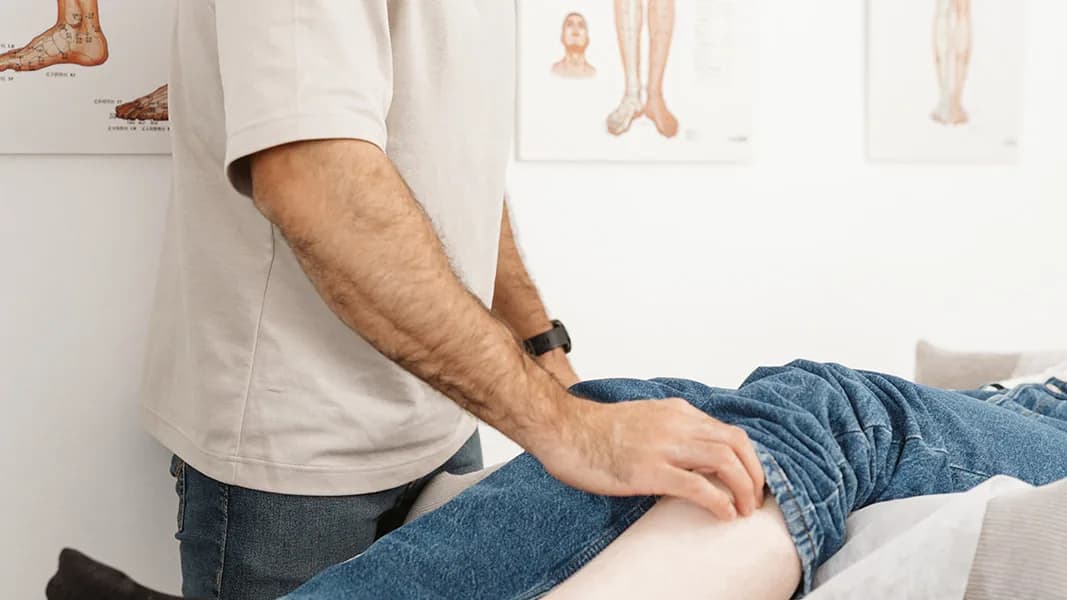
Lower back pain is one of the most common reasons people come to my clinic in Netanya. Many of them have already been down a long road: a family doctor, painkillers, an X-ray, sometimes physiotherapy, sometimes exercises from the internet. For some it helped for a while, for some it helped partly, and for others the pain simply stayed in the background.
The hard part of lower back pain isn't only the pain itself. It's the fear of bending down, getting out of bed, sitting for a long time, lifting something small, or discovering that once again a 'normal' movement sends the back a few steps back.
In this article I want to explain how I look at lower back pain through acupuncture, what you can expect from treatment, what you can do on your own at home, and when it's important to see a doctor before starting complementary treatment.
What actually hurts in the lower back?
In most cases there isn't just one cause. The lower back is an area that works hard: it connects the pelvis, the legs, the spine and the upper body. So pain can be linked to tense muscles, load on the small joints of the back, an unbalanced pelvis, prolonged sitting, lack of movement, repetitive strain, or a combination of several things at once.
Sometimes there's also a finding on an X-ray or MRI, like a disc bulge or wear-and-tear changes. But not every finding on a scan explains how strong the pain is. There are people with significant findings who feel fine, and people with an almost normal scan who suffer a great deal.
This doesn't mean the pain is 'in your head'. Not at all. It means pain isn't always as precise as a damage gauge. Sometimes it's more like an alarm system that stayed too sensitive.
Why does the pain stay even when the scan is normal?
Pain is the body's way of warning that something needs attention. But when pain lasts a long time, the nervous system can become more on edge. The threshold drops, the body reacts faster, and a movement that was once simple can suddenly feel threatening.
In that situation, a treatment that only tries to 'release a muscle' isn't always enough. You have to address the muscles and movement, but also the system that manages the sensation of pain.
So in the clinic I don't only look at 'where does it hurt?'. I also check when it hurts, what makes it worse, what eases it, how the back responds to movement, whether there's a fear of movement, how sleep is, and what the body tells me through its response to treatment.
How does acupuncture approach lower back pain?
The goal of acupuncture in lower back pain is to help the body lower its guard, influence the pain system, and allow more comfortable movement. It isn't magic, and not every back responds the same way. But for some patients, acupuncture can be a meaningful tool within a process of relief and rehabilitation.
I work a lot with the Tan method, where you don't always needle the painful spot directly. Sometimes it's points farther away, in the hands or the legs, that let the body respond well. During treatment I also include a simple movement check: how the back feels bending, rotating, standing up, or in a movement that provokes the pain.
Sometimes a first indication already appears during the treatment: less load, slightly freer movement, or a feeling that the back 'breathes' better. It doesn't happen for everyone, and it isn't the only measure of a successful treatment. For me it's simply a way to understand which direction the body responds to better.
With my background in sports therapy, I make a point of not staying only at the level of 'did the pain drop or not'. I want to understand how the back actually functions: is it easier to stand up, walk, sit, bend, work, train or get back to routine.
What can you expect from a course of treatment?
I don't like big promises. In lower back pain, the important thing is to check the response in an orderly way.
At the start of the process I look for simple signs: is the pain dropping in intensity, is the range of motion improving, is there less stiffness in the morning, can you sit for longer, is sleep calmer, and does the relief hold longer between one treatment and the next.
If there's a good response, we continue and build a process. Sometimes we combine acupuncture, cupping, work on tender points, and guidance toward movement or daily habits. If there isn't a sufficient response after a few treatments, we don't push on by force. We stop, reassess, and sometimes it's right to refer for further investigation or to consider a different treatment direction.
My approach is simple: not to sell treatment, but to check whether it actually helps.
A case from the clinic
Identifying details have been changed to protect privacy.
A 45-year-old patient came in with lower back pain that had lasted close to a year and sometimes radiated to the buttock. She had already had tests and received medical explanations, but in practice she was still afraid to bend, to pick things up off the floor, and to return to the activity she loved.
In treatment we combined Tan-method acupuncture, work with cupping on the lower back, and a look at her sitting and movement habits during the day. After several weeks she reported a significant drop in pain, more confidence in movement, and a gradual return to Pilates.
It's a good case, but I want to say the other side too: not everyone responds at the same pace. Some patients feel a change quickly, some need more time, and there are cases where acupuncture isn't the main tool that's right for them. That's why I check the response and don't promise a result in advance.
What can you do at home, starting today?
The first thing is movement. In most cases, the lower back doesn't like complete rest for long. A daily walk of 15 to 20 minutes, at a comfortable pace, can help more than a lot of complicated stretches.
If you sit a lot, try to get up every half hour, even for a single minute. You don't need a workout. A change of position, a few steps, or a gentle movement of the pelvis and the back is enough.
Local heat can help when there's a feeling of a locked muscle or stiffness. A heating pad in the evening, a hot shower, or a few minutes of pleasant warmth can calm the area.
When sleeping on your side, a pillow between the knees can take a little load off the lower spine. It doesn't solve the problem, but sometimes it's enough to sleep better, and good sleep is an important part of recovery.
What not to do? Don't fall into fearing every movement. Pain doesn't always mean you're causing damage. On the other hand, you also don't need to 'beat the pain' by force. The goal is to find movement the body agrees with, and to progress gradually.
When is it important to see a doctor?
There are situations where you don't start with complementary treatment before a medical workup. If the back pain comes with weakness in the leg, reduced sensation, a problem controlling the bladder or bowel, fever, unexplained weight loss, pain after a significant injury, or pain that worsens unusually, it's important to see a doctor.
Acupuncture can be a good tool, but it doesn't replace a medical diagnosis when there are signs that require examination.
So can acupuncture help with lower back pain?
For some patients, yes. Especially with chronic lower back pain, muscle overload, stiffness, pain that returns in waves, or a situation where the body stays on edge even after the medical workup found nothing dangerous.
The advantage of acupuncture is that it lets you work both with the painful area and with the pain system itself. When you connect that to a movement check, listening to the body's response, and simple guidance toward routine, you can build a clearer treatment process.
Not every back needs the same treatment. Not every pain resolves at the same pace. But if lower back pain is taking over your day, it's worth checking whether your body responds to acupuncture.
Professional sources in brief
Acupuncture appears in the American College of Physicians' recommendations as one of the non-drug options for treating chronic lower back pain, alongside options like exercise, yoga, tai chi and multidisciplinary rehabilitation.
A Cochrane review on acupuncture for chronic non-specific lower back pain found that acupuncture may relieve pain in the short term compared with no treatment, though the picture against sham acupuncture is more complex. So it's right to present acupuncture as a possible treatment tool, not as a promise of a result.
Frequently Asked Questions
- Is acupuncture suitable for a herniated disc too?
- Usually yes, as a supportive treatment alongside medical follow-up. Acupuncture doesn't 'put a disc back in place', but it can ease the pain and the muscle spasm around it. In cases with progressive weakness or serious neurological signs, the first address is an orthopedist.
- Can acupuncture be combined with physiotherapy?
- Yes, and the combination usually works well. Acupuncture calms the pain and releases the tissue, while physiotherapy builds strength and stability over time. When the two are coordinated, each lets the other work better.
- What's the difference between the Tan method and regular acupuncture?
- In the Tan method the points are chosen far from the painful area, according to a system of balances between the body's channels. The practical advantage is the immediate feedback: you move the back during the treatment and see right away whether the direction is right.
- My back pain is brand new. Should I wait or come in?
- Fresh, acute pain tends to improve on its own within days to weeks, and moderate movement helps it. If it doesn't settle, gets worse, or keeps coming back, it's worth checking. And with any of the red flags above, a doctor comes first.
Further reading
- Qaseem A et al., Noninvasive Treatments for Acute, Subacute, and Chronic Low Back Pain: A Clinical Practice Guideline From the American College of Physicians, Annals of Internal Medicine, 2017
- Mu J et al., Acupuncture for chronic nonspecific low back pain, Cochrane Database of Systematic Reviews, 2020
- Low-Back Pain and Complementary Health Approaches, NCCIH (NIH)
Related treatment
More articles
Neck pain radiating to the arm: when is it muscle, when is it a nerve, and how can acupuncture help
Neck pain radiating to the arm doesn't always mean a pinched nerve. Muscle vs nerve pain, when to see a doctor, and how acupuncture can help at a Netanya clinic.
July 4, 2026 · 9 min read
Acupuncture for migraine: why prevention beats chasing attacks
What happens in the brain during a migraine, what the Cochrane review found on preventive acupuncture, and the home steps that lower attack frequency.
May 18, 2026 · 4 min read
To book at the Netanya clinic, send a WhatsApp message or call.
