
Acupuncture for shoulder pain: when the pain gets in the way of movement and sleep
Last updated: October 19, 2026 · 5 min read
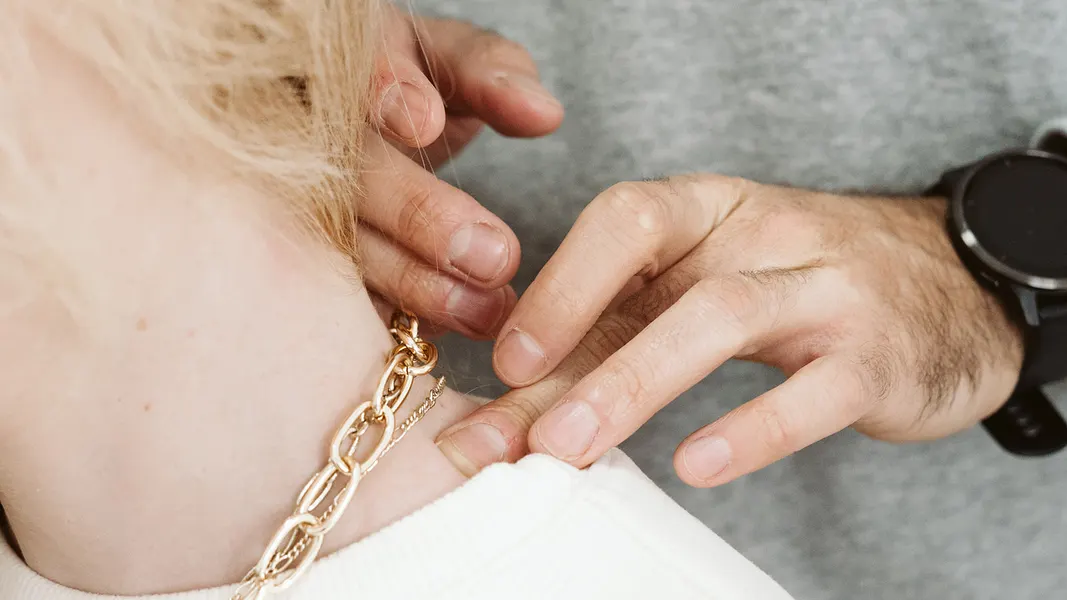
Shoulder pain can make perfectly ordinary actions hard. Putting your arm into a sleeve becomes awkward, it's hard to reach the shelf, and at night you keep turning over to find a comfortable position. If you train, you may feel the pain first in a press or a lift, and later outside the gym too.
At my clinic in Netanya I want to understand which of these actions bother you. The goal may be getting back to training, but it may also be sleeping through the night or getting dressed in the morning without thinking about every movement. That's where we start.
Understanding what is happening in the shoulder
Shoulder pain can come from the tendons, the muscles or the joint. Sometimes it's linked to repeated load, sometimes to an injury, and sometimes it's hard to point to the moment it began. How long the pain has lasted and how it develops matter too: pain when lifting the arm is different from stiffness that gradually limits movement in every direction.
In a frozen shoulder, for example, the pain comes with a significant limitation of movement. A problem in the shoulder tendons may show up as pain while using the arm. The signs can overlap, so the diagnosis relies on a medical assessment, and sometimes on further tests.
When you come to me with a diagnosis or test results, they are part of the picture. I also ask about the neck and shoulder blade, your working hours and what happens at night. If the pain hasn't been checked yet and it's getting worse or makes it very hard to move the arm, it's important to complete a medical workup.
The shoulder stays free during acupuncture
I treat through points away from the shoulder, among others with the Tan method. Before needling we check a movement that bothers you, such as lifting the arm to the side or reaching behind your back. During the treatment you can gently repeat the same movement and check whether the pain or the range of movement has changed.
From the perspective of traditional Chinese medicine, the location of the pain and its path help in choosing the meridians and acupuncture points. So pain at the front of the shoulder may lead to a different choice than pain on the outer side or around the shoulder blade. This is a traditional framework for tailoring the treatment, alongside attention to the medical findings.
When needed I add cupping around the shoulder blades and upper back. The decision depends on the state of the area and on how you respond to treatment.
The aim is to ease pain and help movement. A systematic review by Trinh and colleagues found mixed results for acupuncture for shoulder pain, and the evidence was limited. Acupuncture can be considered as part of a treatment plan, with follow-up on its actual benefit. Pain relief, even when it is noticeable, does not prove that a torn tendon has healed.
Back to training, gradually
A very active 38-year-old patient came in with a stress fracture around the joint at the tip of the shoulder and a small tear in the supraspinatus tendon, one of the shoulder's tendons. The pain kept him from training and made it hard to get back to an activity that was part of his routine.
In the treatments we combined acupuncture and cupping. Over time he described less pain and gradually returned to the gym and to bodyweight training. This is a description of one case; the pace of improvement and the options for returning to activity also depend on the type of injury and on medical guidance.
If the arm moves more comfortably at the end of a session, I want to know what happens next. Does the relief last into the next day? Is it easier to put on a shirt? Is sleep less disturbed? These things help decide whether to continue the same way or change the plan.
Movement and rest between treatments
Unless you've been given other medical advice, it's worth keeping up gentle movement and temporarily adapting activities that make the pain worse. Returning to exercises with weights needs to be adapted to the state of the shoulder; a physiotherapist can help choose exercises and progress the load.
At rest you can try supporting the arm on a pillow and see whether that's more comfortable. If it's hard to find a position at night, mention it during the assessment and treatment. Sleep is part of what we want to improve, and it matters to understand whether the pain appears only in a certain position or continues after changing position.
Pick two or three actions that matter to you, such as putting on a shirt or reaching a shelf, and notice how they feel during the week. There's no need for a detailed diary; these examples will help us understand whether the relief holds in everyday life.
When should you get a medical check?
Sudden severe pain, pain after an injury, inability to move the arm, a change in the shape of the shoulder, significant swelling, loss of sensation, fever or feeling generally unwell need an urgent check. Pain that gets worse or doesn't start to improve within about two weeks is a reason to see a doctor.
If the pain comes with chest pressure, shortness of breath or a cold sweat, seek medical help immediately.
If your shoulder gets in the way of movement or sleep, you can contact me and tell me what you feel and what has already been checked. We'll see whether treatment at the clinic may suit you.
Frequently Asked Questions
- Is acupuncture suitable when there is a rotator cuff tear?
- It can be, as supportive care alongside orthopedic follow-up. Acupuncture doesn't heal a tear, but for some patients it lowers the pain and makes it possible to progress with rehab. Here I'm speaking from clinical experience, not from research results. With a large tear or significant weakness when lifting the arm, an orthopedist comes first.
- What is the difference between a frozen shoulder and tendinitis of the shoulder?
- With overloaded tendons the pain stands out in certain movements, but when someone else moves the arm, the range is usually preserved. With a frozen shoulder the joint locks up, and movement is limited even when it is moved with help. The final distinction is a doctor's, sometimes with imaging.
- Can acupuncture be combined with physiotherapy or a shoulder injection?
- Yes. Acupuncture and physiotherapy combine well: acupuncture lowers pain and makes the exercises possible, and physiotherapy builds strength and stability. If you have had or are planning an injection, tell me and we'll coordinate the timing.
- Why needle the leg when the shoulder hurts?
- That's how the Tan method works: points far from the painful area, chosen according to the relationships between the body's channels. The practical advantage is that the shoulder stays free, so it can be moved during the treatment and any change checked right away.
Not sure if treatment suits you?
You can message me on WhatsApp or call, to ask a question or to schedule a treatment. Visits to the clinic are by appointment.
Further reading
- Vickers AJ et al., Acupuncture for Chronic Pain: Update of an Individual Patient Data Meta-Analysis, The Journal of Pain, 2018
- Trinh K et al., The Efficacy of Acupuncture on Shoulder for Pain Intensity, Functional Status, and General Quality of Life in Adults: A Systematic Review, Medical Acupuncture, 2025
- Ben-Arie E et al., The Effectiveness of Acupuncture in the Treatment of Frozen Shoulder: A Systematic Review and Meta-Analysis, Evidence-Based Complementary and Alternative Medicine, 2020
Related treatments
More articles

Neck pain radiating to the arm: when is it muscle, when is it a nerve, and how can acupuncture help
Neck pain radiating to the arm doesn't always mean a pinched nerve. Muscle vs nerve pain, when to see a doctor, and how acupuncture can help at a Netanya clinic.
July 4, 2026 · 9 min read
Acupuncture for knee pain: keep moving, even with osteoarthritis
Knee pain and osteoarthritis: why adapted movement matters, how acupuncture and Onnetsu fit into treatment at a Netanya clinic, and when to get checked soon.
October 19, 2026 · 5 min read