Acupuncture for migraine: why prevention beats chasing attacks
Last updated: May 18, 2026 · 4 min read
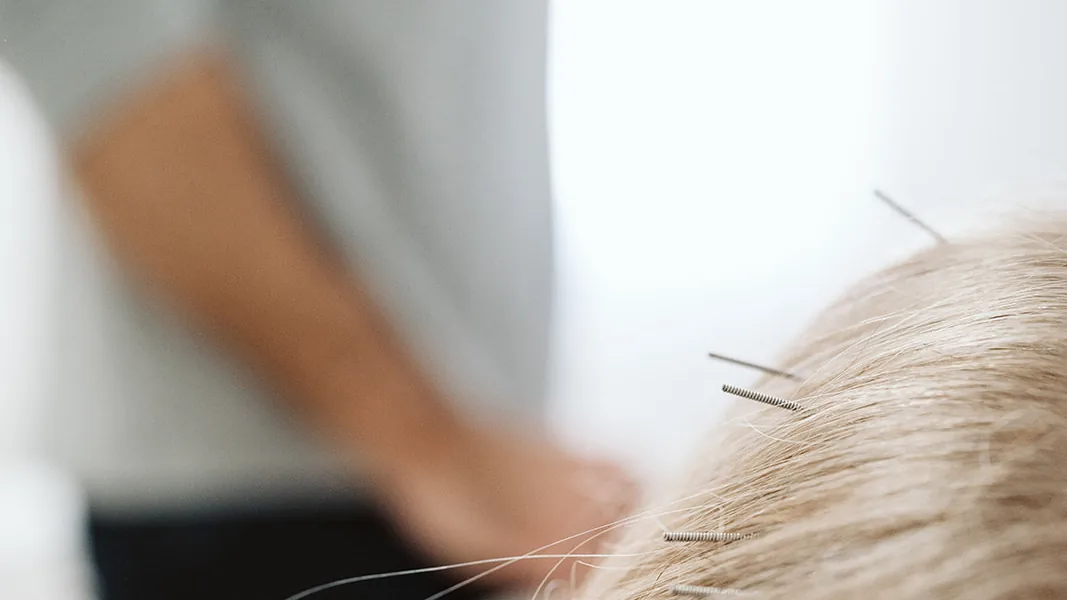
Acupuncture is one of the most studied non-drug tools for preventing migraine. A Cochrane review that pooled studies on thousands of patients found that acupuncture reduces the frequency of attacks compared with no treatment, and for some participants it achieved results similar to preventive medication. For anyone living from attack to attack, that's worth a serious look.
Because a migraine isn't a 'strong headache'. It's a whole neurological event: sensitivity to light and sound, nausea, and sometimes two days erased from the calendar. I see it a lot at my clinic in Netanya. People who recognize the warning yawn or the aura in the eye, and plan their lives around this thing.
So what actually happens in there, where acupuncture fits in, and what you can start doing this week.
What happens in the brain during a migraine attack?
The story usually begins deep in the brainstem, with a change in the sensitivity of the nervous system. From there the trigeminal nerve is activated, which supplies the membranes around the brain: blood vessels dilate, inflammatory substances are released, and every heartbeat is felt inside the temple. In about a quarter to a third of sufferers, an aura appears beforehand, a passing visual disturbance that announces what's coming.
This understanding matters for a practical reason: the system is sensitive between attacks too. A treatment aimed only at the moment of pain misses most of the story.
Triggers: the diary that reveals more than any test
Sleep that's too short or too long. Skipping a meal. A sudden release after a stressful week, right on a Saturday morning. Hormonal changes, red wine, strong smells. Everyone has their own map, and two or three weeks of a simple diary, when an attack started and what happened in the day before it, sometimes teach more than any test.
In my intake this diary is real raw material. It guides the choice of acupuncture points, and no less important, the small recommendations around the treatment.
What does acupuncture offer someone living with migraine?
The main direction is prevention: a series of treatments aimed at lowering the frequency and intensity of attacks, through a gradual calming of an over-sensitive nervous system. A 2016 Cochrane review found that acupuncture reduces attack frequency compared with no treatment, while against sham acupuncture the effect is smaller. In plain terms: there's a real effect, and it isn't uniform across everyone. Like any preventive treatment.
In the clinic I sometimes also use YNSA scalp acupuncture, which is especially convenient for working around the head and neck, and herbs when daily support is needed between sessions.
And what about medication?
You keep taking it. Anyone on preventive medication from a neurologist doesn't stop it in favor of acupuncture, and any dose change is made only with the doctor. Acupuncture works alongside the medication, not against it. The truly good scenario is the one where the neurologist himself suggests reducing it, because the attacks have grown farther apart and shorter.
A case from the clinic
A 33-year-old graphic designer came in with three to four attacks a month, each one costing a full workday. Her diary highlighted short nights against deadlines and sharp spikes in caffeine. We worked with weekly acupuncture at points on the limbs and the scalp, alongside just two small changes: a fixed bedtime, and one less coffee in the afternoon.
After three months she was counting one attack a month, shorter and milder than before. The triptan is still in her bag. She just meets it far less often.
What can you do at home this week?
Set a fixed wake-up time, weekends included: people who get migraines respond better to routine than to long sleep. Don't skip meals. Spread your water intake across the day. And actually keep that diary, four lines in the evening. After a month you'll be holding a document worth gold, for you and for any practitioner you meet.
And when does it need urgent evaluation? A sudden, severe headache that feels different from anything you've known, a headache with fever and a stiff neck, or one accompanied by a new neurological disturbance. In those cases, the ER or a doctor comes first. Everything else can wait.
Frequently Asked Questions
- Does acupuncture help during an active attack too?
- The research focused mainly on prevention, and that's where most of the benefit is. Some patients report relief from gentle acupuncture during an attack, but I don't build a treatment plan around that. The acute attack is managed according to your treating doctor's guidance.
- What's the difference between a migraine and a tension headache?
- A tension headache usually feels like a two-sided pressure, like a band around the head, without nausea. A migraine tends to be one-sided and throbbing, worsens with exertion and comes with sensitivity to light and sound. Both types can respond well to acupuncture, but the approach is different.
- Is a migraine with aura treated differently?
- The acupuncture principles are similar, but an aura is important clinical information. Anyone experiencing an aura for the first time, or a marked change in the familiar pattern, needs a neurological evaluation first of all.
- I'm pregnant and suffer from migraines. Is acupuncture possible?
- In many cases yes, gently and with adaptation, and with the knowledge of the doctor following the pregnancy. Some acupuncture points aren't used during pregnancy, so mention the pregnancy right at the start of the intake.
Further reading
Related treatment
More articles

Neck pain radiating to the arm: when is it muscle, when is it a nerve, and how can acupuncture help
Neck pain radiating to the arm doesn't always mean a pinched nerve. Muscle vs nerve pain, when to see a doctor, and how acupuncture can help at a Netanya clinic.
July 4, 2026 · 9 min read
A natural approach to insomnia: what Chinese medicine can really offer
Why sleep breaks down and what really helps: the Chinese medicine view of insomnia and the small habits that bring back quiet nights.
June 15, 2026 · 4 min read
To book at the Netanya clinic, send a WhatsApp message or call.
